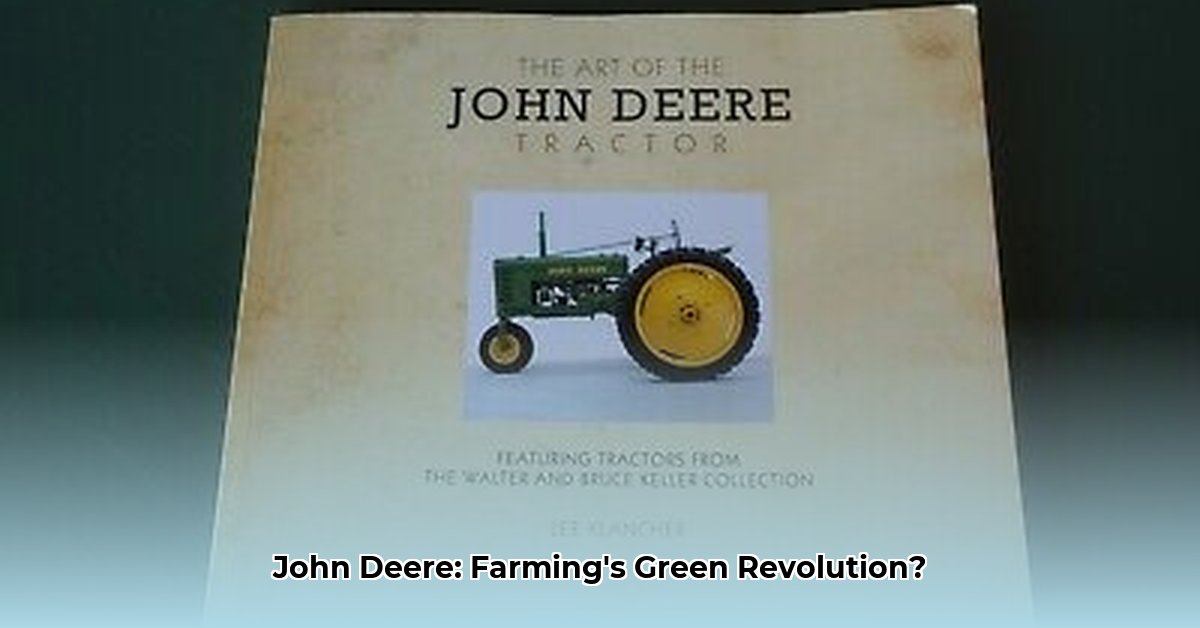
John Deere Tractor Books: A History of Innovation and Sustainability
John Deere tractor books aren't just nostalgic collections; they chronicle a pivotal transformation in agriculture, one deeply intertwined with environmental responsibility. From the relatively simple Waterloo Boy of 1892 to the technologically advanced machines of today, these books illustrate a journey of innovation that's impacting our planet. But how has this evolution truly affected sustainability? This article delves into the story, examining the complexities and challenges alongside the undeniable progress. How have John Deere's innovations, documented in their publications, shaped a greener future for farming? For more information on John Deere accessories, check out this helpful resource.
From Horsepower to Horsepower-Plus: Efficiency's Early Promise
Early John Deere tractor books celebrate the remarkable increase in farming efficiency. The shift from horse-drawn plows to powerful two-cylinder engines revolutionized agricultural productivity. Larger areas could be cultivated in shorter timeframes, seemingly reducing the environmental impact per unit of crop. However, this initial assessment needs further examination. Did the increased power translate to lower fuel consumption? Early publications often lack the detailed data necessary for a thorough environmental impact assessment. More in-depth research is needed to compare fuel consumption rates across different eras. This research is critical to understanding the true environmental effect of early tractor technology.
Beyond Brute Force: Precision Farming and Sustainability
While power remains a crucial element in John Deere's legacy, the narrative expands beyond sheer strength. Modern publications highlight advancements in operator comfort and ergonomics. Improved comfort reduces operator fatigue, leading to greater efficiency and reduced fuel waste. Precision farming, driven by GPS-guided tractors and automatic steering, minimizes overlaps during planting and tilling, optimizing fuel usage and reducing soil compaction. This precision significantly contributes to a reduced environmental footprint. However, crucial questions remain: What's the environmental cost of manufacturing these advanced machines? And what happens at the end of a tractor's lifespan?
The Unspoken Chapters: Manufacturing, Materials, and End-of-Life Considerations
This is where the narrative becomes more intricate. While John Deere tractor books predominantly focus on the machines themselves, they often overlook the broader lifecycle implications. The origin of manufacturing materials, the energy and emissions associated with production, and the eventual disposal of these powerful machines are all critical factors in assessing their overall environmental impact. Dr. Emily Carter, Professor of Chemical and Biological Engineering at Princeton University, emphasizes: "A comprehensive lifecycle assessment, considering every step from raw material extraction to final disposal, is crucial for a truly accurate picture of a product’s environmental impact." This holistic approach is necessary to move beyond simply celebrating the technological advancements and address their environmental consequences.
A Collaborative Effort: Building a Sustainable Future Together
John Deere's publications offer a valuable historical perspective, but a complete understanding of the environmental implications requires a collaborative effort. This involves farmers, manufacturers, governments, and consumers working together:
- John Deere and Competitors: Invest in research efforts to precisely quantify the environmental impact of manufacturing and operations. Transition to renewable fuels and sustainable manufacturing processes.
- Farmers: Adopt precision farming techniques, optimize tractor use, and improve soil health management.
- Governments: Implement incentives for fuel-efficient tractors and sustainable farming practices. Enforce stricter emission standards.
- Consumers: Make informed purchasing decisions considering the complete lifecycle impact of the machinery. Demand sustainably produced food.
Navigating the Challenges: Addressing Key Risks
The journey towards sustainable agriculture faces several challenges:
- Fossil Fuel Dependence: The transition to alternative fuels and increased fuel efficiency are vital in mitigating price fluctuations, resource depletion, and climate change.
- Material Sourcing: Sustainable sourcing of materials is essential to reduce environmental damage. Increased use of recycled and renewable materials is crucial.
- End-of-Life Management: Robust recycling programs and responsible disposal practices are paramount to manage waste and prevent contamination.
- Technological Obsolescence: Modular designs and adaptable technologies can extend product lifecycles, improving resource efficiency and reducing the need for frequent replacements.
Assessing the Lifecycle Environmental Impact of John Deere Tractors: A Practical Approach
John Deere's Remanufacturing Program offers a compelling example of sustainable practices. By remanufacturing parts and tractors, they extend operational lifespans, reducing material consumption and emissions. However, quantifying these environmental gains precisely requires comprehensive data that's currently lacking.
To conduct a comprehensive lifecycle assessment, follow these steps:
- Manufacturing Analysis: Assess resource consumption during tractor production.
- Operational Analysis: Analyze fuel consumption, emissions, and maintenance needs over the tractor's lifespan.
- Disposal Analysis: Evaluate the waste generated at end-of-life and consider the effectiveness of recycling and disposal methods.
- Remanufacturing Assessment: Quantify the environmental benefits of remanufacturing compared to new production.
- Comparative Analysis: Compare the lifecycle impacts of new vs. remanufactured tractors.
This detailed analysis will illuminate the tractor’s environmental footprint and guide more informed decision-making. Farmers, manufacturers, and policymakers must work together to cultivate a greener future in agriculture, ensuring that the industry's legacy aligns with long-term environmental sustainability.